DeWalt
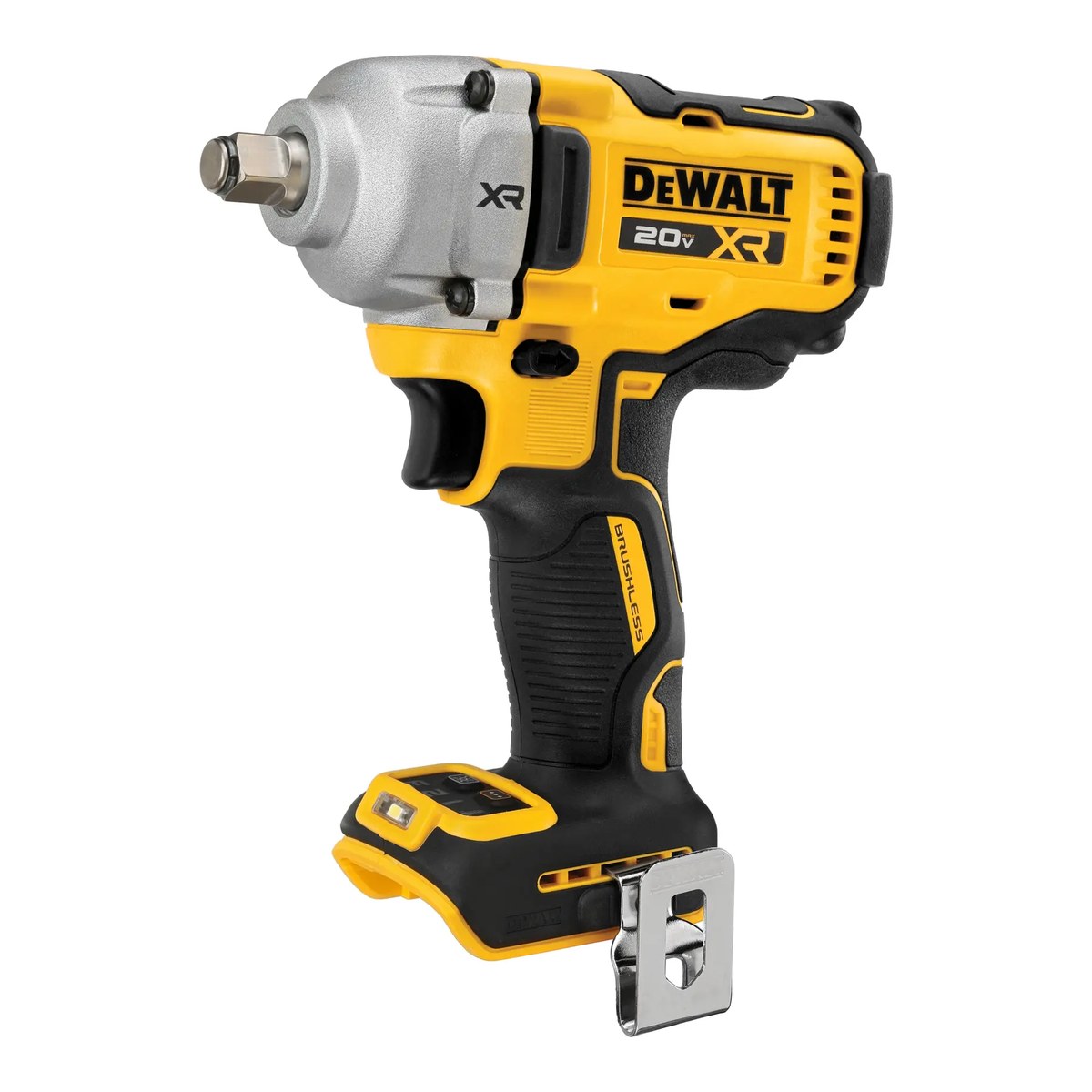
DeWalt 20V Max XR DCF891 Impact Wrench
4.7from 310 buyer reviews on Home Depot, as of Mar 2026
Replacing the DCF894, DeWalt's current mid-range 1/2-inch wrench is rated at 600 ft-lbs fastening and 800 ft-lbs breakaway, the biggest paper numbers in the 18V-class mid-torque field. A push-button selector gives three impacting speeds plus Precision Wrench, which pauses briefly once impacting starts in forward and slows down in reverse so a loose nut doesn't fly off. The DCF891 uses a hog-ring anvil; the DCF892 is the same tool with a detent pin.
Bare tool: battery and charger sold separately. We may earn a commission. Price and stock on Amazon may differ from ours.
Specifications
Features
Why people buy it
- ✓Owners moving up from the DCF894 say it hits noticeably harder in the same size, closer to the old DCF899 high-torque than to its predecessor.
- ✓Mode 2 alone breaks loose truck lug nuts for most owners, leaving mode 3 in reserve for rusted mower-blade and frame bolts.
- ✓Precision Wrench mode makes it safer to run down smaller fasteners without snapping them, and the reverse slowdown keeps lug nuts from launching.
- ✓Tradespeople running 5/8- and 3/4-inch wedge and screw anchors use it daily to drive and remove them.
- ✓About $279 bare, the same as the Milwaukee 2962, with higher published torque.
What to watch for
- ✗At about 4 lbs bare it's half a pound heavier than Milwaukee's 2962, and reviewers note it isn't as compact and light as some of the competition.
- ✗The single LED sits in the foot rather than ringing the anvil; reviewers consistently prefer halo-style lights that aim straight at the socket.
- ✗Precision Wrench's built-in pause makes it slower than simply feathering the trigger when you're running down a lot of nuts.
- ✗Some owners wonder whether the small push-button mode switch will hold up to years of greasy gloves.
- ✗Three-year limited warranty is shorter than Milwaukee's five years on the competing mid-torque.
What owners report about the DeWalt 20V Max XR DCF891 Impact Wrench
From what 13 owners of the DCF891 reported between April 2025 and November 2026.
The DCF891 is DeWalt's 1/2-inch mid-torque impact wrench, and for owners it is the car-work gun: lug nuts, brakes and suspension. The strongest praise comes from owners who had tried something else first, such as a compact DeWalt or budget brands with bigger torque claims, and found the 891 took off F-150 lug nuts the others could not.
Durability is the main worry in this window. Four owners describe a dead or broken 891, one after only five lug nuts, and three more asked whether a rattle or grinding inside a new tool was normal. Owners also hit its limits on the hardest jobs, such as one owner's seized control arm bolt, which is where the high-torque DCF900 or DCF961 comes in.
It suits DIY mechanics and tradespeople who want one 1/2-inch gun for most automotive work. Register it and keep the receipt, since one owner found repair parts cost more than a new tool. If you regularly fight rusted suspension or crank bolts, owners point to a high-torque gun instead.
- Works wellRemoves truck lug nuts that smaller guns can't: two owners whose compact DCF921 or other cordless guns failed on F-150 lugs torqued to 150 ft-lbs say the 891 rips them off
- Works wellMuch stronger in use than budget guns with bigger claimed numbers: one owner who moved from two off-brand high-torque impacts calls it smoother, quieter, more controlled and far more powerful under load
- Works wellBig enough for most car work, small enough to live with: one owner keeps it as his only impact wrench, and another with a high-torque DCF961 in the garage kept an 891 in his truck
- Works wellOwners in trades buy it for work, from a dock-and-door technician to auto-tech students
- GripeFailures, sometimes very early: one owner's gearbox shredded on the sixth lug nut of its first job, one's died after a year of light automotive use, one's quit after two to three years, and one broke during a wheel-bearing job and its owner switched brands
- GripeRattles and grinding on new units: three owners asked about a rattle or clicking inside new tools, one starting a week in
- GripeNot enough for every seized bolt: one owner could not budge a lower control arm bolt that a breaker bar then moved easily
- GripeRepair parts cost more than the tool: the owner whose gearbox failed found a replacement case, hammer and grease priced above a new 891, and he was two months out of warranty with no receipt
Questions owners ask
Will the DCF891 take off truck lug nuts?
Owners say yes. One whose DCF921 could not remove F-150 lug nuts torqued to 150 ft-lbs says the 891 rips them off without trouble, and another bought it after his other guns failed on the same truck.
DCF891 or the high-torque DCF900?
Owners doing lug nuts, brakes and general car work are happy with the 891. For seized suspension hardware owners look at a high-torque gun; one owner's 891 could not budge a control arm bolt that a breaker bar then moved easily.
Is a rattle inside a new DCF891 normal?
Three owners asked about this in the window, one hearing a rattle that came and went and one a clicking that began after a week of work use. None reported a definitive answer, and one owner noted that an exchange is easiest while the tool is still new.
Is the DCF891's 800 ft-lbs a fastening or a breakaway figure?
Breakaway. DeWalt rates the DCF891 at 600 ft-lbs fastening, which is how hard it tightens, and 800 ft-lbs breakaway, which is how much seized torque it can crack loose. Those are the biggest paper numbers among the 18V-class mid-torques in the catalog.
DCF891 or DCF892 - which anvil should I get?
They're the same tool apart from the anvil. The DCF891 uses a hog ring for fast one-handed socket changes; the DCF892 uses a detent pin that locks the socket on, which is the safer choice for overhead work or anywhere a dropped socket is hard to retrieve.
Can the DCF891 break loose truck lug nuts?
Owners say mode 2 alone does it for most truck lugs, leaving mode 3 for rusted mower-blade and frame bolts. Owners moving up from the older DCF894 say it hits noticeably harder in the same size.
What does Precision Wrench mode on the DCF891 do?
In forward it pauses briefly once impacting starts, which makes it safer to run down smaller fasteners without snapping them; in reverse it slows down so a loose nut doesn't fly off. The trade-off is speed: the built-in pause makes it slower than simply feathering the trigger when you're running down a lot of nuts.
How does the DCF891 compare with Milwaukee's 2962?
Both are about $279 bare, and the DCF891 quotes higher numbers (800 ft-lbs breakaway to Milwaukee's 650). In exchange it's half a pound heavier at 4 lbs bare, has a single foot LED instead of Milwaukee's three-LED ring around the anvil, and carries a 3-year warranty against Milwaukee's 5.
Compare the DeWalt 20V Max XR DCF891 Impact Wrench
Related tools
More from DeWalt →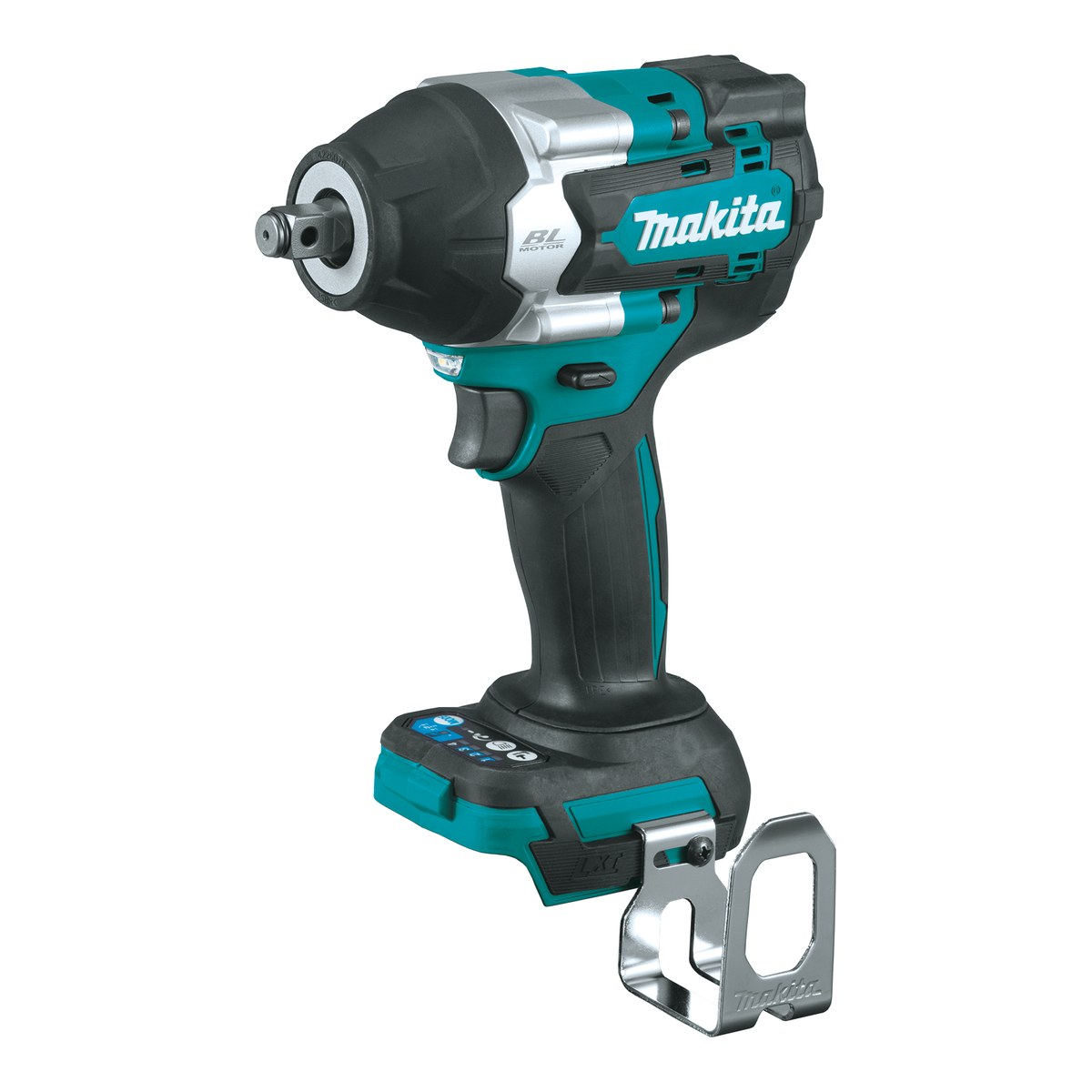
Makita's 18V LXT mid-torque puts 520 ft-lbs of fastening and 740 ft-lbs of nut-busting torque into a 6-11/16-inch body that weighs 6.0 lbs with a battery. Four speeds sit alongside three forward and three reverse Auto-Stop modes, the most granular control in this class, plus a full-speed mode that cuts the trigger travel. XPT sealing and a flexible joint that isolates the battery from grip vibration are aimed at daily professional use; the XWT18 is the detent-pin twin.
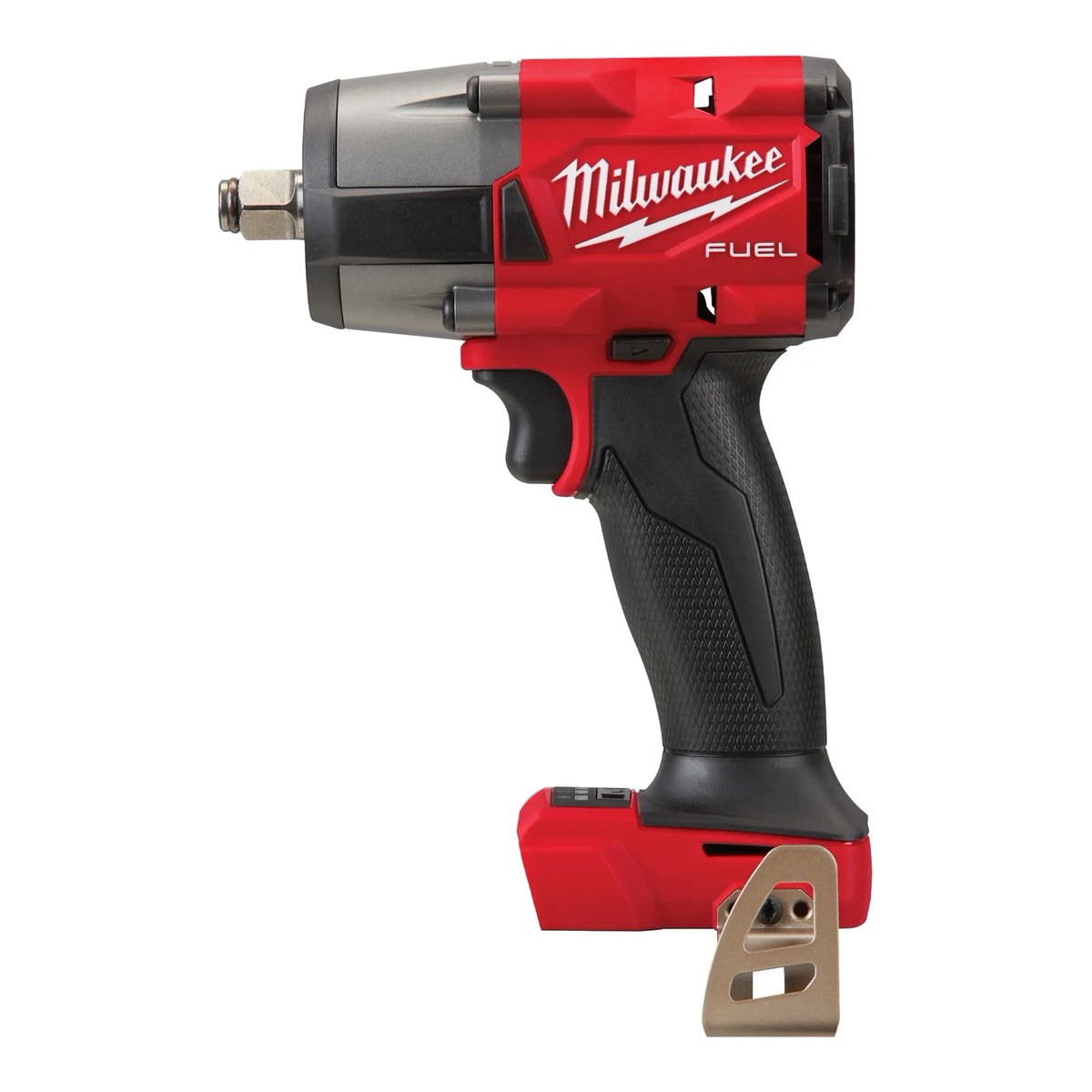
Milwaukee's Gen 2 mid-torque packs 650 ft-lbs of nut-busting torque into a 6-inch head and 3.5 lbs bare, which is why it lives on so many shop carts. Four-mode Drive Control gives three speeds plus Mode 4, which quits at about 35 ft-lbs when snugging and backs off RPM once a bolt breaks free in reverse. Three LEDs ring the anvil, and the friction-ring 2962 has pin-detent (2962P) and 3/8-inch (2960) siblings built on the same body.
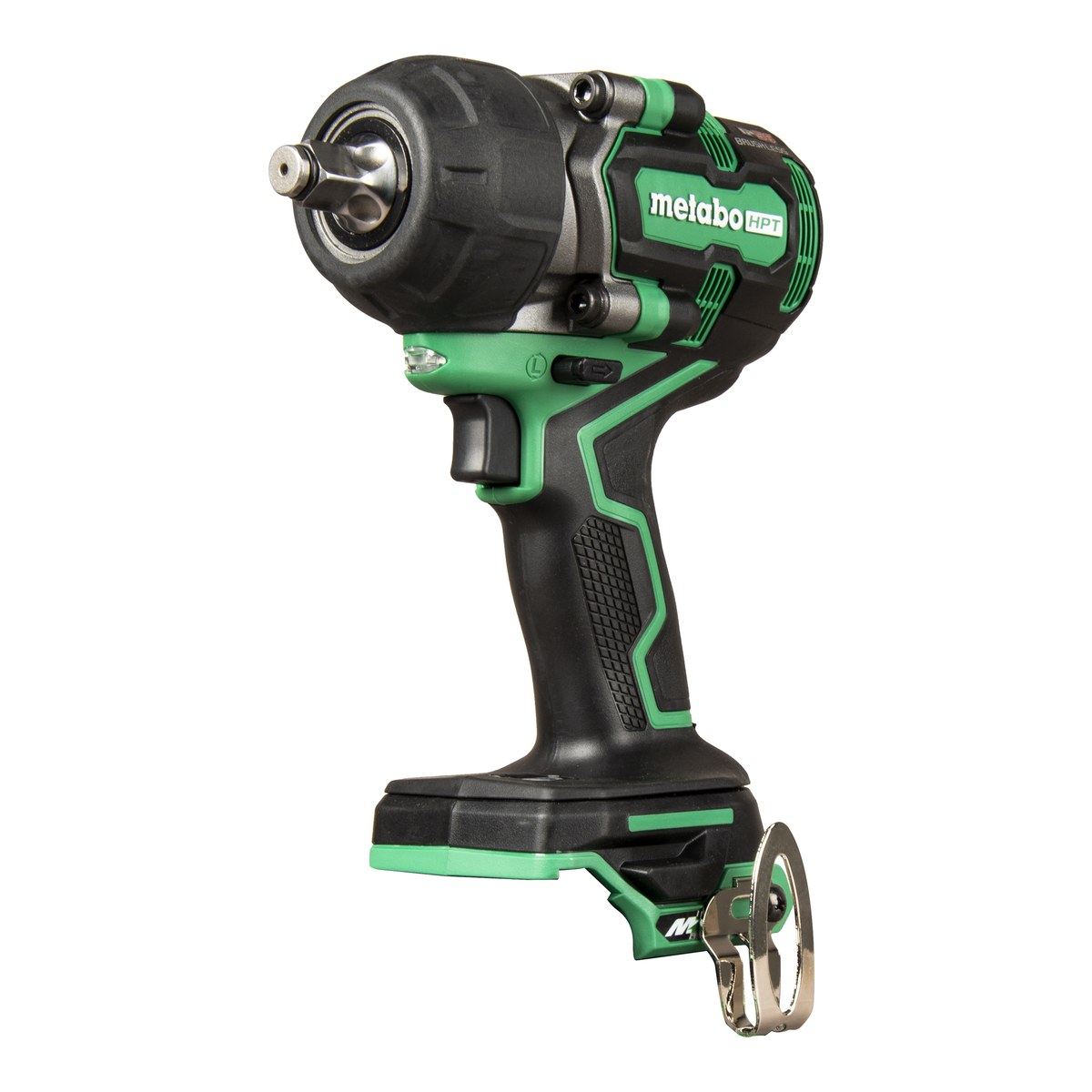
Rated at 568 ft-lbs tightening and 774 ft-lbs nut-busting, Metabo HPT's 36V mid-torque wrench has a 4-stage speed switch running 1,500 to 2,400 RPM. An auto stop mode prevents snapping bolts from over-tightening, and it can be combined with the High/Low selector. The main unit is rated IP56 against dust and water, and a vibration damper sits between the handle and the battery mount. It runs on any MultiVolt 36V/18V pack or on Metabo's AC adapter.
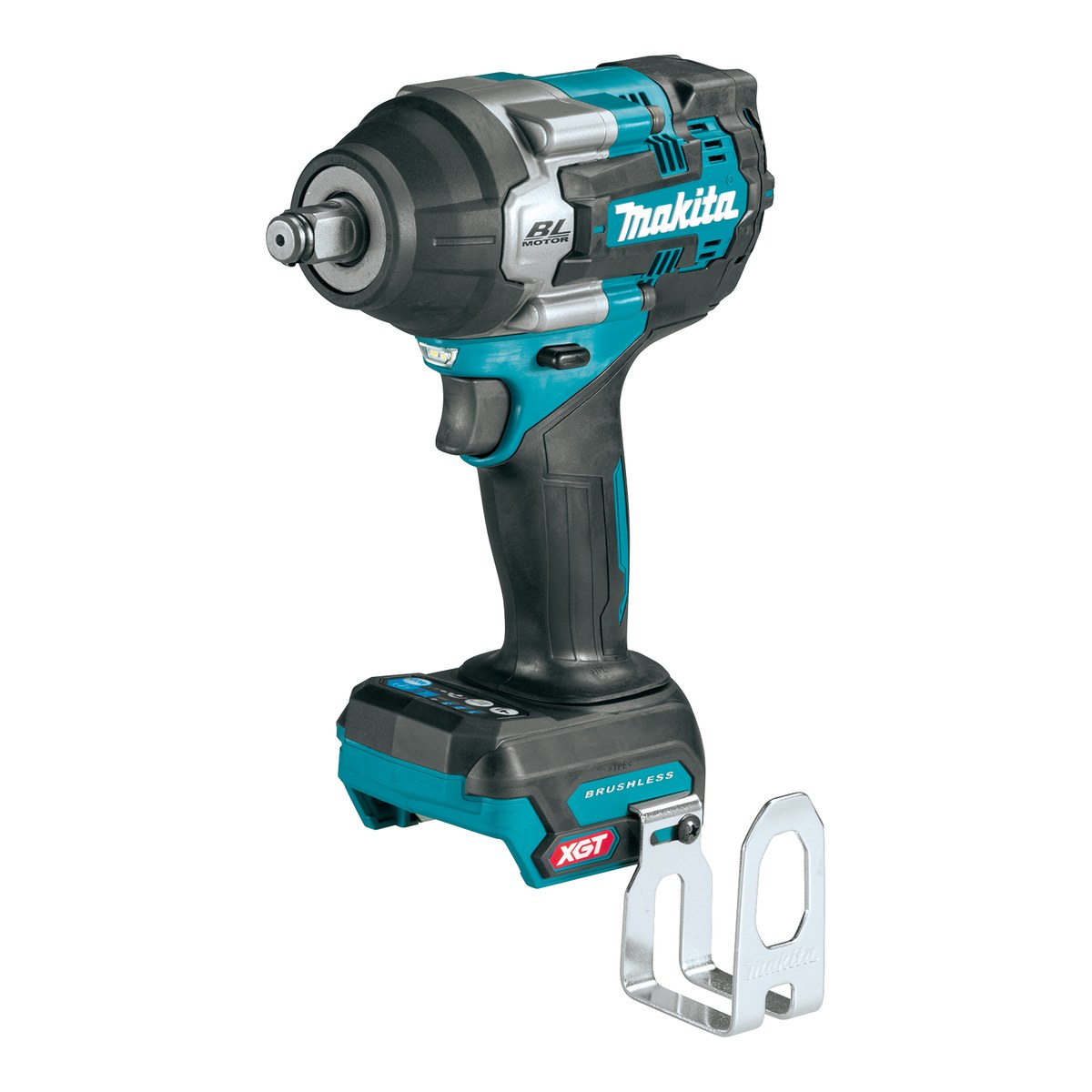
At 810 ft-lbs nut-busting, the highest breakaway rating of any mid-torque here, plus 560 ft-lbs fastening, Makita's 40V XGT wrench comes in the same 6-11/16-inch length as the LXT version. It keeps the four speeds, three forward and three reverse Auto-Stop modes and full-speed mode, and adds XGT's tool-to-battery communication for overload and overheat protection. Weight is 6.0 lbs with a compact 2.5Ah pack; the GWT08 is the detent-anvil version.
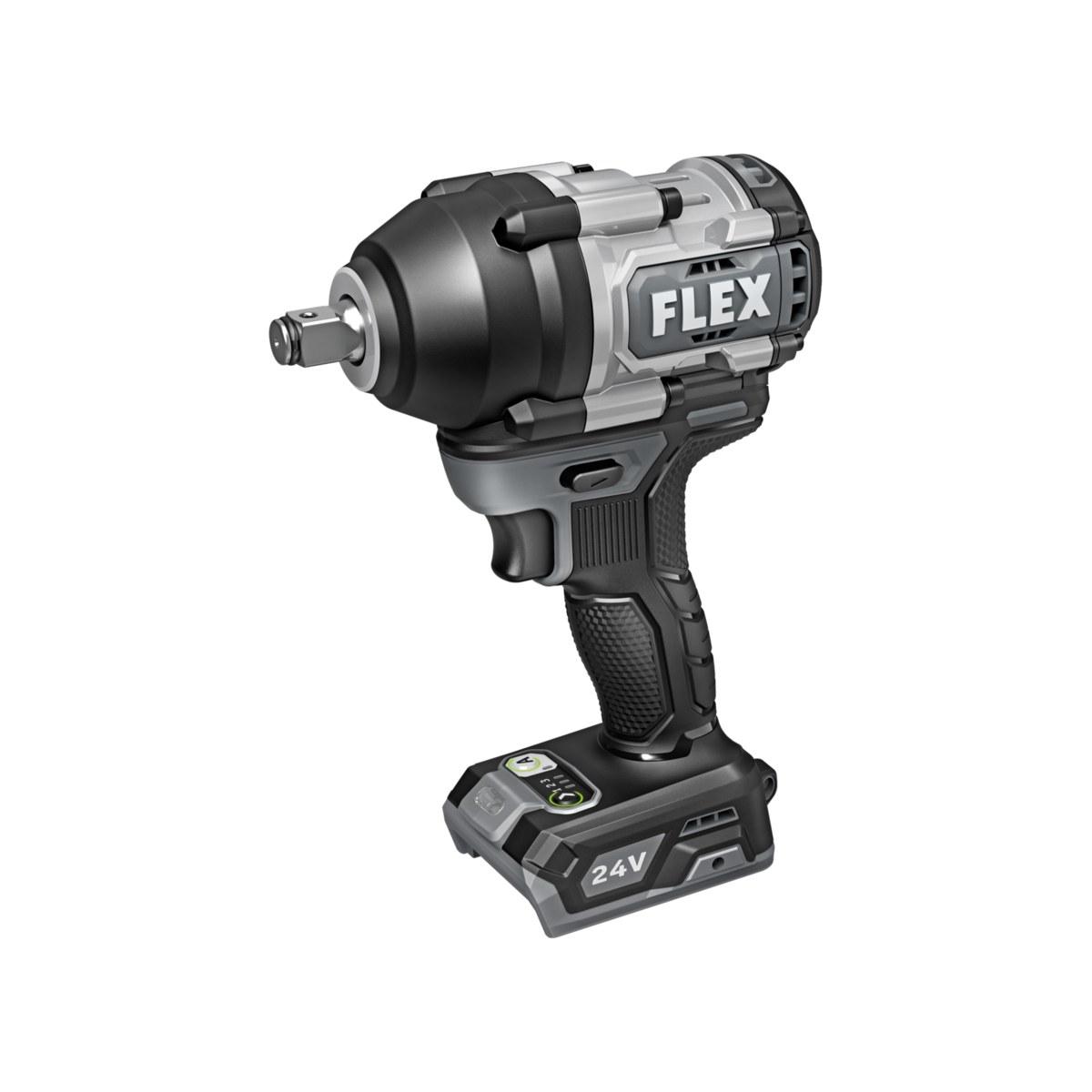
Flex rates this 6.3-inch wrench at 600 ft-lbs fastening and 750 ft-lbs nut-busting, tied with DeWalt's DCF891 for the highest fastening rating here, and it backed them up with a consistent 414.8 ft-lbs working torque on Pro Tool Reviews' test rig. Three speeds run from 450 to 2,700 RPM. Bolt Auto Stop prevents over-tightening lug nuts, and Bolt Removal mode shuts off once a nut breaks free. A vibration-isolating housing and an electric brake round it out. The anvil is friction ring only.
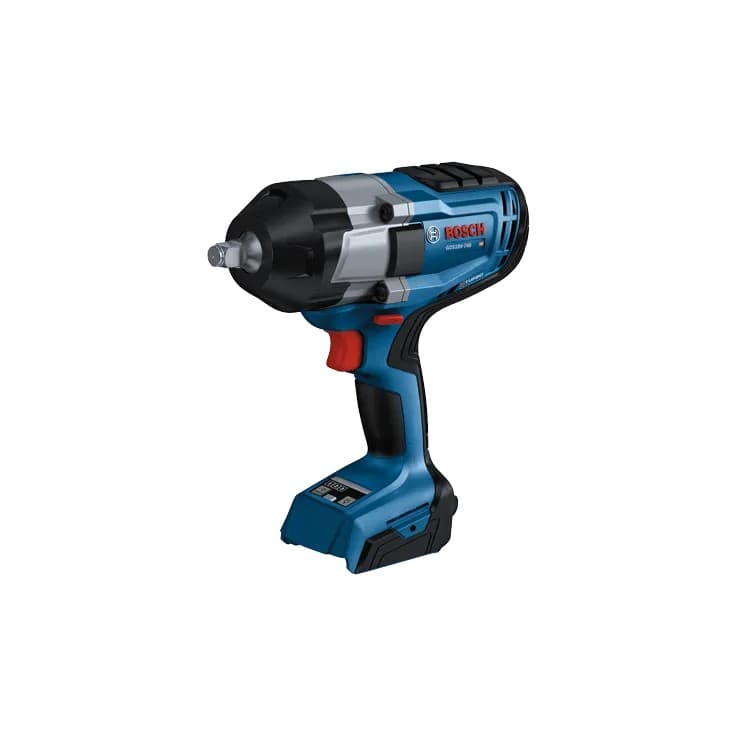
Bosch's high-torque 1/2 in wrench is part of its PROFACTOR 18V line. Bosch rates it at 740 ft-lbs fastening and 1,180 ft-lbs breakaway, with three power settings (0-800, 0-1,200 and 0-1,750 RPM), a friction-ring anvil and a BITURBO brushless motor intended for Bosch's CORE18V High Power packs. It is 8.7 in long and 6.4 lbs bare. Bare price is about $315.